

Pouch Laminator vs. Roll Laminator: Which One is Right for Your Office or Print Shop?

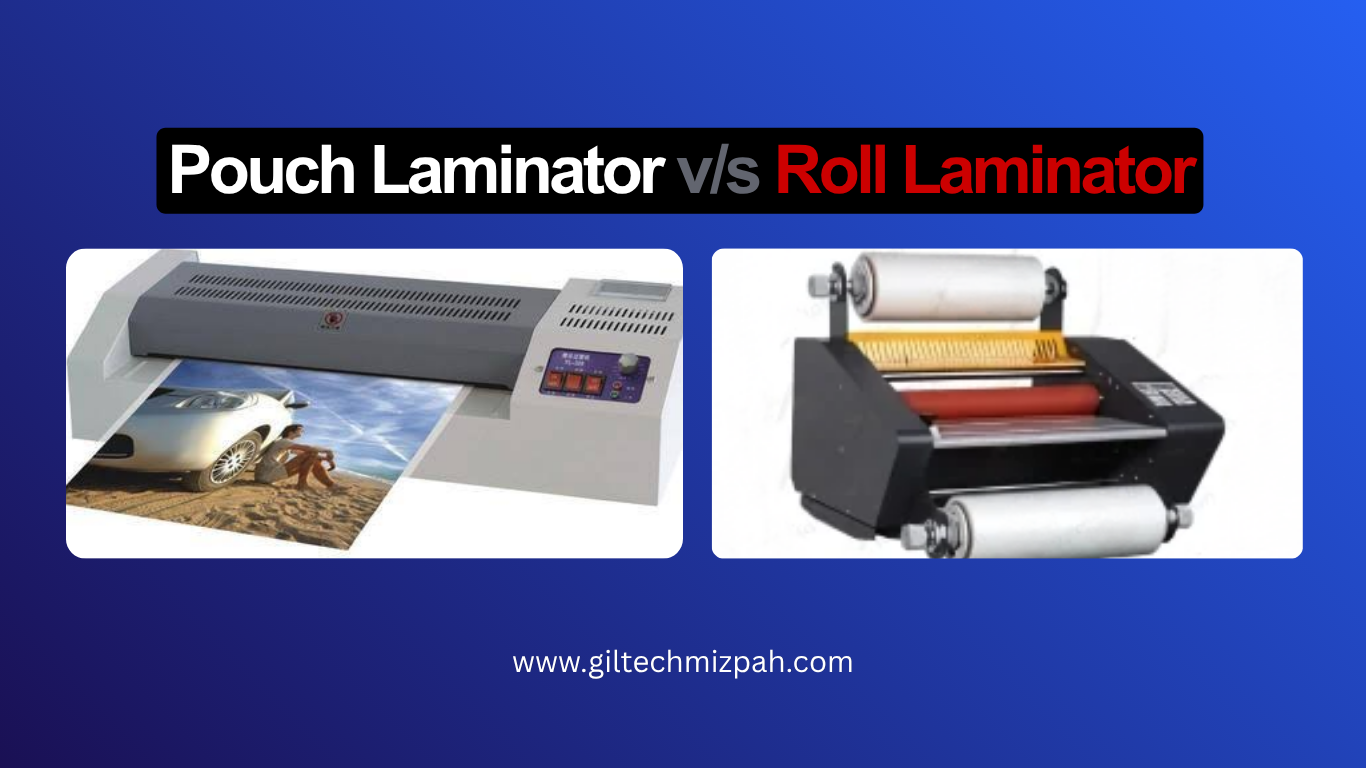
What Does a Lamination machine Do:
Laminators are essential tools for protecting and preserving important documents. These machines apply a clear plastic film to papers, safeguarding them from moisture, dirt, tearing, fading, and everyday wear. A lamination machine is commonly used to protect valuable items such as ID cards, certificates, driving licences, photographs, menus, and other important documents, ensuring they remain durable and presentable for years.
There are two main types of lamination machines available: Pouch Laminators and Roll-to-Roll Laminators. Pouch laminators are ideal for laminating individual documents, ID cards, certificates, and photos, making them perfect for offices, schools, and homes. Roll-to-roll laminators use continuous rolls of film and are designed for high-volume and large-format applications such as posters, banners, signage, and commercial printing.
We offer a wide range of laminators, including pouch, roll-to-roll, and wide-format models to suit different applications and production volumes.
How Roll Laminators Work
Roll lamination is a lamination process that uses large rolls of laminating film, which are fed through a laminating machine. This method is designed for high-volume tasks, providing a continuous lamination process that can handle various widths and lengths. Roll laminators are ideal for applications requiring the lamination of larger documents, such as posters, banners, and signage, as well as for high-volume environments like print shops, schools, and large businesses. The process offers versatility, speed, and cost-effectiveness for large-scale projects, although it requires a higher initial investment and more space compared to other lamination methods.
What a Pouch Laminator Really Does to Your Documents
Pouch lamination is a lamination process that involves placing the document or material to be laminated into a pre-sized pouch, which is then fed through a laminating machine. The pouches are typically sealed on one side and coated with adhesive on the inside, which melts and bonds the layers together when passed through the heated rollers of the machine. This method is ideal for small to medium-sized projects, offering precise and high-quality lamination for individual items such as photographs, ID cards, certificates, and other standard-sized documents. Pouch laminators are user-friendly, portable, and require minimal setup, making them suitable for use in offices, homes, and small businesses.
The Many Ways a Pouch Laminator Can Help You
Pouch laminators are ideal for occasional, smaller projects (like ID cards or menus), with document feed widths ranging from 4 inches to 18.9 inches. Roll laminators are designed for continuous, high-volume, and large-format work, with film roll widths spanning from 12 inches to 62 inches.
Types of Pouch Laminators
Pouch laminators are machines that seal documents inside plastic pouches. They are primarily categorised by their heating mechanism, the number of rollers (which dictate speed and quality), their size, and their operating capacity.
| Category | Type | Description |
|---|---|---|
| By Heating Method | Thermal (Hot) Laminator | Uses heated rollers; ideal for documents, signs, and menus. |
| Cold Laminator | Uses pressure-sensitive film; suitable for heat-sensitive materials. | |
| Dual Hot/Cold Laminator | Supports both hot and cold lamination for greater flexibility. | |
| By Number of Rollers | 2-Roller Machine | Compact and economical; suitable for home and office use. |
| 4-Roller & 6-Roller Machine | Delivers bubble-free, professional-quality lamination. | |
| By Size & Capacity | Standard / Document Laminator | Designed for A4, Letter, and Legal-size documents. |
| Large Format / Industrial Laminator | Suitable for posters, blueprints, and large signage. | |
| By Lamination Method | Self-Adhesive Pouches | Peel-and-stick pouches that require no laminating machine. |
Types of Roll Laminators
Roll laminators are high-volume machines that use two continuous rolls of film to encase documents. They fall into three primary categories—Thermal (Hot), Cold (Pressure-Sensitive), and Wide-Format—each designed for different materials, finishes, and production demands.
Understanding the specific machine type is essential for determining which laminating equipment suits your printing, signage, or crafting requirements:
| Type of Roll Laminator | Description | Best For |
|---|---|---|
| Thermal (Heated Roll) Laminator | Uses heated rollers to bond laminating film to documents. | Menus, posters, book covers, and commercial printing. |
| Desktop/Tabletop Thermal Laminator | Compact thermal laminator for small offices and schools. | Flashcards, certificates, menus, and posters. |
| Industrial/Commercial Thermal Laminator | Heavy-duty machine designed for continuous production. | Print shops, packaging, calendars, and bulk lamination. |
| Cold (Pressure-Sensitive) Laminator | Uses pressure instead of heat to apply film. | Photos, vinyl graphics, and heat-sensitive materials. |
| Manual Cold Laminator | Hand-operated laminator with simple controls. | Small-scale vinyl and photo lamination. |
| Electric Cold Laminator | Motorized version for faster and consistent output. | Professional graphics and signage applications. |
| Wide-Format Laminator | Large machine designed for oversized media. | Banners, vehicle wraps, trade show graphics, and signage. |
| Roll-to-Roll Laminator | Processes continuous rolls of material with automatic unwinding and rewinding. | High-volume commercial printing and advertising production. |
Top 10 Laminator Brands
| Brand & Popular Model | Known For | Key Features |
|---|---|---|
| Gobbler – Ultimate-12 (A3), 312-PL | Heavy-duty, high-volume laminators | Anti-jam reverse, hot & cold lamination, quick warm-up |
| VMS – AeroSeal A4, LM Deluxe A3 | Professional bubble-free lamination | Rapid warm-up, superior heat dissipation |
| Growlam – GL-290, GL-320 | Office and home laminators | Hot & cold lamination, 90-second warm-up |
| GBC – Fusion 6000L | Premium commercial laminators | 1-minute warm-up, auto-adjusting sensors |
| Fellowes – Jupiter 125, Pixel | Durable office laminators | HeatGuard technology, auto shut-off |
| Amazon Basics – A303 (A3), A401 (A4) | Budget-friendly laminators | Fast warm-up, user-friendly operation |
| SToK – ST-L11A A4 | Compact thermal laminators | Lightweight design, supports 125-micron pouches |
| Foxin – FX-300 Plus | Smart laminators with jam control | Dual hot/cold modes, anti-jam release |
| Zebronics – A3L | Reliable office laminators | A3 compatibility, LED indicators |
| Scotch (3M) – PRO TL906 | Consistent thermal lamination | Excellent heat distribution, smooth finish |
What Should You Expect to Pay?
Pouch laminators range from ₹1,000 to ₹30,000 depending on size and features, while roll laminators start at ₹8,000 for basic manual desktop models and can exceed ₹1,500,000 for full commercial setups.
Choosing the Right Laminating Method: Roll vs. Pouch
Business Volume
For high-volume lamination needs, such as in printing houses or large enterprises, a Roll Laminator is more efficient and cost-effective. Conversely, for occasional or small-batch tasks in offices or at home, a Pouch Laminator is ideal due to its simplicity and low setup.
Material Size and Type
If your documents vary in size, especially large-format items like posters, roll laminators offer greater flexibility. For standard-size papers, photos, or small items, pouch laminators provide precise and convenient lamination.
Budget Considerations
Roll laminators typically have a higher upfront cost, but they reduce the per-unit cost for large projects. Pouch laminators are cheaper to start with, making them suitable for small-scale operations, though costs can rise if used for bulk lamination.
Space Requirements
Roll laminators usually occupy more space due to their continuous feed and large rollers. Pouch laminators are compact and portable, making them ideal for offices or environments with limited space.
Conclusion
Choosing the right laminator ultimately depends on your daily production volume, document sizes, and budget. Pouch laminators are ideal for offices needing compact, low-cost, and user-friendly machines for occasional tasks. Roll laminators are better for print shops requiring high-speed, continuous bulk operation and larger formats .
For more details, contact us on +91 9544400230 or visit www.giltechmizpah.com.
Freequently Asked Questions:
What is the difference between a Roll laminator and a Pouch laminator ?
A pouch laminator uses laminating pouches and is ideal for documents and ID cards. A roll laminator uses film rolls and is best for large-format and high-volume lamination.
Does a lamination machine support both hot and cold lamination?
Many models support both. Hot lamination offers a durable finish, while cold lamination is suitable for heat-sensitive materials.
How long does the machine take to warm up?
Most lamination machines are ready to use within 1–5 minutes.
Does the machine come with a warranty?
Yes, most lamination machines come with a manufacturer's warranty, which varies by brand and model.
What should I do if the laminating pouch gets stuck?
Use the reverse function if available and carefully remove the pouch. Avoid pulling it forcefully to prevent damage.